
Ring and Blink are both owned by Amazon, both work with Alexa, and both sell battery cameras and video doorbells for about $100 or less. So the Ring vs Blink choice isn’t about which company is better. It comes down to how much you want to pay each month, whether you’d rather recharge a battery or swap AAs every year or two, and whether you want a way to save video without a subscription.
Both brands moved their whole lineups to 2K video over the past year, and both changed their plans. This guide compares what each one does for free, what the plans cost, how they store video, and which cameras and doorbells are worth buying.
Ring vs Blink: The Short Answer
Quick answer: choose Ring if you want the better free features, more camera and doorbell options, longer video history, or a full alarm system with professional monitoring. Choose Blink if you want the lowest prices, batteries that last up to two years, and a way to save clips without paying monthly. Both work with Alexa, and neither works with Google Home or Apple Home.
If you already know which way you’re leaning, these are the five products worth looking at:
- Ring Outdoor Cam 2K — Best Ring camera, with direct Wi-Fi, a siren, and up to 6x zoom.
- Blink Outdoor 2K+ — Best Blink camera, with up to two years on two AA batteries.
- Ring Battery Doorbell 2K — Best Ring doorbell for most homes, with a rechargeable built-in battery.
- Blink Battery Doorbell 2K+ — Best budget doorbell, running on three AA batteries.
- Blink Sync Module 2 — The add-on that lets Blink cameras save clips with no subscription.
What Ring Does Best
Ring has the bigger lineup by a wide margin. Alongside its outdoor and indoor cameras, it sells spotlight and floodlight cameras, six video doorbells, 4K models at the top of the range, and the Ring Alarm security system (our guide to the best floodlight cameras compares Ring’s 4K floodlight camera with other brands). If you want cameras, a doorbell, door sensors, and a keypad from one brand in one app, Ring is the only one of the two that can do it.
Ring’s battery cameras also connect straight to your Wi-Fi, with no hub in between. The Ring Outdoor Cam 2K records 2K video with up to 6x zoom, has color night vision in low light, and includes a siren you can set off from the app. Ring’s battery cameras can also run on a plug-in adapter or a solar panel.
Ring gives you more before you pay anything. Without a plan, you still get live view, motion alerts, two-way talk, and motion zones. With a plan, Ring keeps up to 180 days of video history, three times longer than Blink.
It’s also the only one of the two with professional monitoring. Ring Pro adds 24/7 monitoring for Ring Alarm, which makes Ring a real security system rather than just a set of cameras (our guide to the best DIY home security systems compares Ring Alarm with SimpliSafe, eufy and Aqara, and our SimpliSafe vs Ring Alarm comparison puts the two alarms head to head). If you’re also weighing Google’s doorbells, our Ring vs Nest doorbell comparison covers that matchup.
What Blink Does Best
Blink is the budget brand, and it’s built around one idea: cameras you can mount and forget. The Blink Outdoor 2K+ runs on two lithium AA batteries for up to two years, so there’s nothing to take down and charge. Blink’s plug-in Mini cameras cost even less, which makes Blink the cheapest way to cover several rooms.
Blink’s other big strength is local storage. Add a Sync Module 2 and a USB flash drive, and your cameras save motion clips to the drive with no monthly fee. You can still watch and download those clips in the Blink app, which Ring can’t match with its current cameras.
Blink also has the cheapest plan for a single camera. Blink Basic costs $3.99 a month, a dollar less than Ring’s cheapest plan.
There are a few catches. New Blink camera and doorbell kits now ship with the Sync Module Core, which has no USB port, so the free local storage route means buying a Sync Module 2 separately. Blink cameras only use 2.4 GHz Wi-Fi. And without a plan, live view is limited to 5 minutes and nothing gets recorded unless you’ve added local storage.
Ring vs Blink Side by Side
Here’s how the two brands compare on the points that matter most:
| Factor | Ring | Blink |
|---|---|---|
| Typical prices | About $100 for a 2K outdoor camera or doorbell, up to $250 for 4K | About $50 to $100 |
| Battery cameras | Rechargeable battery, plug-in, or solar | Lithium AA batteries (up to 2 years) |
| Hub needed | No | Sync Module for battery cameras and doorbells |
| Free features | Live view, motion alerts, two-way talk, motion zones | Motion alerts, live view (5-minute limit) |
| One-device plan | $4.99 a month | $3.99 a month |
| Whole-home plan | $9.99 a month | $11.99 a month |
| Video history | Up to 180 days | Up to 60 days |
| Save video with no plan | No (current 2K and 4K cameras) | Yes, with Sync Module 2 or XR |
| Professional monitoring | Yes, with Ring Alarm and Ring Pro | No |
| Wi-Fi | Dual-band on many models | 2.4 GHz only |
| Alexa | Yes | Yes |
| Google Home or Apple Home | No | No |
What you get without a subscription
Neither brand records much for free, but Ring’s free tier is more useful day to day. A Ring camera with no plan alerts you to motion and lets you open live view and talk through the camera for as long as you like. You can also set motion zones so a busy street doesn’t set it off. Nothing is saved, though, and person detection is part of the paid plans.
A Blink camera with no plan sends motion alerts and gives you live view, but each live view session stops after 5 minutes. Person and vehicle detection are paid too. The difference is that Blink lets you fix the “nothing is saved” problem with local storage, which we’ll get to below.
Subscription cost and what it unlocks
If you have a single camera or doorbell, Blink is cheaper: Blink Basic costs $3.99 a month ($39.99 a year), and Ring Solo costs $4.99 a month ($49.99 a year). Both cover one device and add saved video plus person detection.
With several cameras, the math flips. Ring Multi covers every Ring device at your home for $9.99 a month ($99.99 a year), while Blink Plus costs $11.99 a month ($119.99 a year) for all your Blink devices. Blink Plus adds an extended warranty, and Ring Multi adds multi-camera live view.
Both brands now sell AI features on top. Blink Basic AI ($6.99 a month) and Plus AI ($19.99 a month) add written video descriptions, Known Faces, and alerts for unusual activity, though not in Illinois. Ring Pro ($19.99 a month) includes AI video descriptions, video search, and Familiar Faces, along with professional monitoring for Ring Alarm. Ring can also add its AI features to Solo or Multi for an extra monthly fee.
The bigger difference is history. Ring keeps up to 180 days of video, and Blink keeps up to 60 days. For most homes, 60 days is plenty, but it matters if you only check footage after you notice something missing.
Saving video without a plan
This is where Blink clearly wins. A Blink Sync Module 2 has a USB port, and with a flash drive of up to 256 GB, it saves motion clips from up to 10 Blink cameras and doorbells. There’s no monthly fee, and you can view, share, and download the clips in the Blink app. It doesn’t save live view sessions, and you won’t get person detection, but you’ll have a record of what happened.
The catch is that new kits like the Blink Outdoor 2K+ and Battery Doorbell 2K+ come with the Sync Module Core, which doesn’t support local storage. You can add a Sync Module 2 (about $50) to the same system, or a Sync Module XR with a microSD card.
Ring has no real equivalent. Its only local option, Ring Edge, needs a Ring Alarm Pro base station, a microSD card, and a paid plan, and it doesn’t work with 2K or 4K cameras. If you want to avoid monthly fees completely, Blink is the better of the two, and our guide to security cameras without a subscription covers brands that record to a built-in card.
Batteries, power, and the Sync Module
The biggest hardware difference in any Blink vs Ring camera comparison is power. The two brands run their battery cameras in completely different ways, and it explains most of the other differences.

A Ring battery camera talks directly to your Wi-Fi router and runs on a rechargeable battery. That means no hub to place, dual-band Wi-Fi on many models, and quick access to live view. It also means charging: Ring doesn’t publish battery life figures, and how long a charge lasts depends on how much motion the camera sees. In cold climates, keep in mind that Ring’s batteries won’t charge below freezing, so a solar panel won’t help much in a hard winter.
A Blink battery camera mostly sleeps. Its Sync Module stays connected to your Wi-Fi and wakes the camera over a low-power radio when there’s motion or when you open live view. That’s how Blink gets up to two years from two AA batteries (Blink rates that at its 1080p setting, so expect less if you record everything in 2K). The trade-off is the extra box, which has to sit within range of each camera. If a camera drops offline, our guide on why smart cameras keep going offline covers Sync Module placement.
Smart home compatibility
Since Amazon owns both, both work with Alexa. Echo speakers can announce motion or a doorbell press, and an Echo Show can bring up live view from either brand.
Neither works with Google Home or Apple Home, and neither has any Matter devices. Blink adds IFTTT and Siri Shortcuts support, which helps a little, but there’s no way to see a Blink or Ring camera in the Google Home app. If you’re an Apple user, Ring only works through third-party bridges, which we explain in does Ring work with HomeKit.
On privacy, Ring offers optional end-to-end encryption that turns off some cloud features. Ring has also drawn criticism over how police can request footage through its Neighbors app, so it’s worth checking the privacy settings in either app before you set things up. If you’re also considering eufy, which saves video at your home instead of the cloud, see our eufy vs Ring comparison.
Ring vs Blink Doorbell
For a battery doorbell, the choice comes down to charging versus AAs. The Ring Battery Doorbell 2K and the Blink Battery Doorbell 2K+ both record 2K video in a square 1920 x 1920 frame, which shows visitors from head to toe and packages on the ground.
The Ring doorbell has a built-in battery. When it runs low, you pop the doorbell off the wall and charge it over USB-C, or keep it topped up with your existing doorbell wires. It connects directly to Wi-Fi and has up to 6x zoom.
The Blink doorbell runs on three lithium AA batteries for up to 16 months at 2K (or up to 22 months on Blink’s power-saving setting). It can also connect to doorbell wiring (12 to 24 VAC) so it rings your indoor chime. It needs a Sync Module, which is included in the system version, and it’s rated from -5°F to 113°F.
Either way, plan on a subscription if you want saved video and person alerts, or add a Sync Module 2 to the Blink system for local clips. If you’d like options beyond these two brands, see our best doorbell cameras guide.
Which Should You Choose?
When people ask whether to buy Ring or Blink, the answer usually depends on these situations:
- You want to spend as little as possible: Blink. The cameras cost less, and the single-camera plan is cheaper.
- You never want to pay a monthly fee: Blink with a Sync Module 2 and a USB drive.
- You don’t want to recharge anything: Blink. AA batteries last a year or more.
- You have several cameras and want a plan: Ring. Ring Multi costs less than Blink Plus and keeps three times the history.
- You want a full security system with monitoring: Ring, with Ring Alarm and Ring Pro.
- You want more hardware choices: Ring, with spotlight, floodlight, 4K, and wired models.
- You use Google Home or Apple Home: neither. Both brands are Alexa-only.
Which Ring or Blink Products to Buy
Ring Outdoor Cam 2K — Best Ring Camera
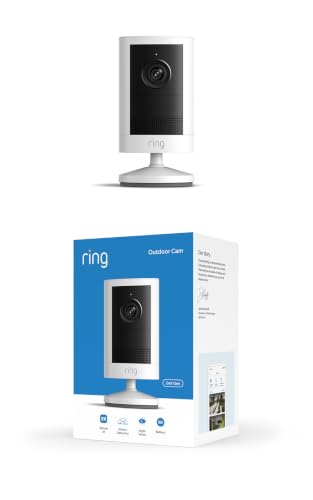
Ring’s current battery outdoor camera, with 2K video, up to 6x zoom, color night vision in low light, and a built-in siren. It connects directly to Wi-Fi, so there’s no hub to buy, and it can also run on a plug-in adapter or solar panel.
Best for: Alexa homes that want the more capable free tier or plan on a Ring Multi subscription.
Price: ~$100
Blink Outdoor 2K+ — Best Blink Camera

Blink’s best battery camera, with 2K video, 4x zoom, an IP65 weather rating, and up to two years on two lithium AA batteries. This version includes the Sync Module Core it needs to connect.
Best for: anyone who wants to mount a camera and forget about it, on a tight budget.
Price: ~$100
Ring Battery Doorbell 2K — Best Ring Doorbell

A 2K Ring doorbell with a head-to-toe view and up to 6x zoom. The battery is built in, so you remove the doorbell to charge it, or keep it charged from your doorbell wires.
Best for: Alexa homes, renters, and anyone without doorbell wiring who wants Ring’s free features.
Price: ~$100
Blink Battery Doorbell 2K+ — Best Budget Doorbell

Blink’s 2K doorbell runs on three lithium AA batteries for up to 16 months and can be wired to ring your indoor chime. This system version includes the Sync Module Core.
Best for: budget buyers who’d rather swap batteries once a year than recharge.
Price: ~$80
Blink Sync Module 2 — Best Add-On for No Subscription

Not a camera, but the piece that makes Blink work without a plan. Plug in a USB flash drive (up to 256 GB, sold separately), and it saves motion clips from up to 10 Blink devices that you can watch in the app.
Best for: Blink owners who want saved clips without a monthly fee.
Price: ~$50
The Bottom Line
The Ring vs Blink decision is mostly about cost and convenience. Ring gives you more hardware, a better free tier, longer history, a cheaper whole-home plan, and an alarm system with monitoring. Blink gives you lower prices, AA batteries that last a year or more, and the only real way to save clips without a subscription.
If you want more outdoor options from other brands, see our best outdoor security cameras guide.
Is Blink or Ring better?
It depends on what you want. Ring has more hardware, a more useful free tier, longer video history, and professional monitoring with Ring Alarm. Blink is cheaper, its battery cameras last up to two years on AA batteries, and it can save clips locally without a subscription.
Does Blink work without a subscription?
Yes. Without a plan, Blink sends motion alerts and gives you live view for up to 5 minutes at a time. To save clips for free, add a Sync Module 2 with a USB flash drive or a Sync Module XR with a microSD card.
Does Ring record without a subscription?
No. Without a plan, Ring cameras give you live view, motion alerts, two-way talk, and motion zones, but they don’t save any video. Ring’s plans start at $4.99 a month for one device.
Can Ring and Blink cameras be used together?
Not in one app. Ring and Blink use separate apps, but both work with Alexa, so you can see either brand’s live view on an Echo Show and get alerts from both on your Echo speakers.
Do Ring or Blink cameras work with Google Home or HomeKit?
No. Both brands work with Alexa only among the big smart home platforms, and neither supports Google Home, Apple Home, or Matter.

Written by Evan Mercer
Founder & Lead Researcher, Smart Home Matrix
Evan digs through spec sheets, firmware changelogs, and thousands of owner reviews so you don’t have to. Every guide starts with a compatibility check and ends with picks he would install in his own home. Read more about Evan and this site, or see exactly how we choose products.