
A humidifier adds moisture to the air, and a dehumidifier removes it. So the humidifier vs dehumidifier question isn’t about which one is better: it’s about whether the air in your home is too dry or too damp. The two devices do opposite jobs, and buying the wrong one makes the problem worse.
The easiest way to know which one you need is to measure the humidity. This guide explains what each device does, the signs that tell you which problem you have, and what to buy for each one.
Humidifier vs Dehumidifier: The Short Answer
Quick answer: if the humidity in your home is below 30%, you need a humidifier. If it stays above 50%, or you notice a musty smell, condensation or mold, you need a dehumidifier. Between 30% and 50%, you don’t need either. That’s the range the EPA, ENERGY STAR and Mayo Clinic recommend.
In most homes, the answer changes with the seasons. Heating makes the air dry in winter, and humid weather makes it damp in summer, especially in a basement. Our guide to what the humidity should be in your house has the exact levels for each season.
If you already know what you need, these are the three products worth looking at:
- Govee H5075 — Best hygrometer, to measure the humidity before you buy anything else.
- Levoit OasisMist 450S — Best smart humidifier, with warm and cool mist and a humidity target you set in the app.
- Midea Cube 20 Pint — Best smart dehumidifier, with a large tank, a drain hose and app control.
What a Humidifier Does
A humidifier puts water vapor into the air. You need one when the air is too dry, which usually happens in winter: cold outdoor air holds very little water, and when your furnace heats it, the relative humidity drops. Aprilaire, which makes whole-house humidifiers, says a home without one can be as dry as 10% to 15% in winter.
There are four main types:
- Ultrasonic (cool mist). A small plate vibrates the water into a fine mist. These are quiet and cheap to run, and most smart humidifiers use this design. However, the EPA says ultrasonic and impeller models spread the minerals in tap water as a white dust, so it recommends distilled water.
- Evaporative. A fan blows air through a wet wick. It doesn’t make white dust, but you have to replace the wick.
- Warm mist and steam. These heat the water before it leaves the unit. They release fewer minerals, but they use more electricity, and the hot water can burn. Mayo Clinic recommends a cool-mist model in a child’s room for that reason.
- Whole-house. A unit installed on the furnace adds moisture to every room through the ducts. A humidistat or a thermostat controls it.
A humidifier needs regular care. The EPA’s guide to using home humidifiers says to empty and refill a portable unit every day and clean it every third day, because a dirty tank can spread bacteria and mold. It also says not to humidify above 50%.
What a Dehumidifier Does
A dehumidifier pulls damp air in with a fan and passes it over a cold coil. The water in the air condenses on the coil and drips into a bucket, and drier air comes out the other side. It’s the same process an air conditioner uses, which is why running the AC also lowers the humidity in summer. It works best with the thermostat fan on Auto (see our guide to thermostat fan On vs Auto).
You need one when the air stays damp, which usually means summer, a humid climate or a basement. A few things are worth knowing before you buy one:
- Capacity is measured in pints per day. ENERGY STAR sizes them by room size and how damp the space is, and it says it’s better to buy one that’s too big than too small.
- The water has to go somewhere. Most models stop when the bucket is full. Many also take a hose for continuous draining to a floor drain, and some have a pump that pushes the water up into a sink or out a window.
- It warms the room a little. The compressor and fan add some heat, so the air that comes out is slightly warmer.
- Cold rooms are harder. ENERGY STAR says frost can form on the coils when the room is below about 65°F. Look for a model with auto-defrost if your basement is cool.
- It uses more electricity than most humidifiers. It has a compressor, like a small air conditioner. ENERGY STAR certified models are about 20% more efficient than models that aren’t certified.
Humidifier vs Dehumidifier Side by Side

Here’s how the two compare on the things that matter when you’re deciding.
| Humidifier | Dehumidifier | |
|---|---|---|
| What it does | Adds moisture to the air | Removes moisture from the air |
| Use it when | The humidity is below 30% | The humidity stays above 50% |
| Usual season | Winter, when the heating is on | Summer, and all year in a damp basement |
| Usual rooms | Bedrooms and living rooms | Basements, laundry rooms and bathrooms |
| Signs you need it | Dry skin, static shocks, a dry nose or throat | Musty smell, condensation, mold, damp walls |
| Upkeep | Refill daily and clean every third day | Empty the bucket or use a drain hose, clean the filter |
| Electricity use | Low for cool mist, higher for warm mist | Higher, because it runs a compressor |
| Typical price | About $50 to $150 for a smart portable model | About $180 to $300 for a smart portable model |
The goal of both is the same: keeping the humidity between 30% and 50%. They just push it in opposite directions.
Do I Need a Humidifier or Dehumidifier?
Start by measuring. A hygrometer costs between $10 and $50, and you may already have one: smart thermostats from ecobee, Google Nest and Honeywell Home show the indoor humidity, and so do most smart temperature sensors. Our guide to HomeKit temperature sensors lists options for Apple Home. Check the reading over a few days, because it changes with the weather and with cooking and showers.

These signs tell you the air is too dry:
- Static shocks when you touch a doorknob
- Dry skin, cracked lips, or a dry nose or throat in the morning
- New gaps in wood floors or trim
- A reading below 30%
These signs tell you the air is too damp:
- A musty smell, especially in the basement
- Water on the inside of the windows, or on cold pipes and walls
- Mildew in the bathroom or mold spots on the walls
- A reading that stays above 50%, or ever goes above 60%
Some common situations, and what usually fixes them:
- A cold-climate winter: a humidifier. In the bedroom, a portable model is enough. For the whole house, a unit on the furnace.
- A humid summer: the air conditioner first, and a dehumidifier if the house still feels damp.
- A damp basement: a dehumidifier, often all year. Fix the source of the water too, like gutters that drain next to the foundation.
- A bedroom when someone has a cold: a cool-mist humidifier. Mayo Clinic says warm and cool mist work equally well, but the hot water in a warm-mist model can burn.
- Allergies: usually a dehumidifier. The EPA says damp air helps dust mites and mold grow. If you have allergies or asthma, Mayo Clinic suggests that you talk to your doctor before you use a humidifier.
Can You Use Both?
Yes, and many homes do. Just don’t run them in the same room at the same time, because they’d work against each other. The usual setup is a humidifier in the bedroom in winter and a dehumidifier in the basement in summer. If your basement is damp all year, you might run the dehumidifier there and a humidifier upstairs in the same week.
Which Humidifier, Dehumidifier and Hygrometer to Buy
These three cover most homes. The humidifier and the dehumidifier are both smart models: you set a target humidity in the app, they hold it for you, and you can control them with Alexa or Google Assistant.
Govee H5075 — Best Hygrometer
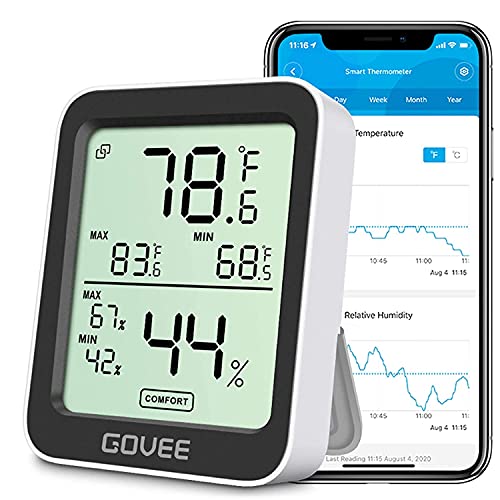
A small humidity and temperature meter with a large screen. It’s accurate to within 3% relative humidity, and the Govee Home app shows a graph of the readings and alerts you when the humidity goes outside the range you set. It connects over Bluetooth, so the app only updates when your phone is within range.
Best for: anyone who isn’t sure whether they need a humidifier or a dehumidifier yet.
Price: ~$13
Levoit OasisMist 450S — Best Smart Humidifier

An ultrasonic humidifier with warm and cool mist and a 4.5L tank that you fill from the top. Its built-in sensor holds the humidity level you choose in the VeSync app, and the Auto mode on the display keeps the room between 40% and 60%. It’s our top choice in our guide to the best smart humidifiers, which also covers models for Apple Home.
Best for: bedrooms and medium rooms in a dry winter.
Price: ~$90
Midea Cube 20 Pint — Best Smart Dehumidifier

A dehumidifier that removes up to 20 pints of water a day in spaces up to 1,500 square feet. Its 3.2-gallon tank is larger than on most dehumidifiers, so you empty it less often. With the included drain hose, you can drain it continuously instead. You set the humidity between 35% and 85% in Midea’s SmartHome app, and it has auto-defrost for cool basements. It’s ENERGY STAR certified.
Best for: a slightly damp basement, a laundry room or a large bedroom. For a very wet basement, look for a 50-pint model.
Price: ~$180
If you have central heating and air conditioning, a whole-house humidifier or dehumidifier is another option, and your thermostat can control it. The ecobee Enhanced and Premium, the Nest Learning Thermostat (4th gen) and the Honeywell Home X8S can, but the ecobee Essential and the Nest Thermostat (2020) can’t. We compare the ecobee models in ecobee Essential vs Enhanced vs Premium, and our guide to the best thermostats with humidity control covers every option.
Conclusion
The humidifier vs dehumidifier choice depends on one number: your indoor humidity. Below 30%, add moisture with a humidifier. Consistently above 50%, or with a musty smell or condensation, remove it with a dehumidifier. Between 30% and 50%, you don’t need either. Measure for a few days before you buy, and expect the answer to change with the seasons: many homes need a humidifier in winter and a dehumidifier in summer.
What is the difference between a humidifier and a dehumidifier?
A humidifier adds water vapor to the air, and a dehumidifier removes it. A dehumidifier pulls damp air over a cold coil, collects the water that condenses in a bucket or drains it through a hose, and blows out drier air. Both aim for the same range: 30% to 50% relative humidity.
Do I need a humidifier or dehumidifier in winter?
Usually a humidifier. Heating makes the indoor air dry, and readings below 30% are common in cold weather. Don’t humidify above 50%, and lower the setting if water condenses on the windows. A damp basement can still need a dehumidifier in winter, but look for a model with auto-defrost, since the coils can frost below about 65°F.
Is a humidifier or dehumidifier better for allergies?
Usually a dehumidifier. The EPA says damp air helps dust mites and mold grow, so keeping the humidity under 50% helps. If you have allergies or asthma, Mayo Clinic suggests that you talk to your doctor before you use a humidifier.
Can you use a humidifier and a dehumidifier at the same time?
Not in the same room, because they would work against each other. Many homes use both in different places or seasons: a humidifier in the bedroom in winter and a dehumidifier in the basement in summer.
Should I put a humidifier or dehumidifier in the basement?
A dehumidifier. Basements are usually the dampest part of a house, and a musty smell or damp spots on the walls are signs the humidity is too high. Choose one with enough capacity for the space and a drain hose or pump, so you don’t have to empty the bucket every day.

Written by Evan Mercer
Founder & Lead Researcher, Smart Home Matrix
Evan digs through spec sheets, firmware changelogs, and thousands of owner reviews so you don’t have to. Every guide starts with a compatibility check and ends with picks he would install in his own home. Read more about Evan and this site, or see exactly how we choose products.