
Nanit and Owlet are two of the best-known smart baby monitor brands, but they don’t measure the same thing. The Nanit vs Owlet choice comes down to what you want to know at night. Nanit is an overhead camera that tracks your baby’s sleep and, with its patterned Breathing Wear, breathing motion. Owlet’s Dream Sock reads your baby’s pulse rate and oxygen level, and its Dream Sight camera adds video.
This guide compares how each one monitors your baby, what’s free and what needs a plan, what a full setup costs, and which Nanit or Owlet products are worth buying.
Nanit vs Owlet: The Short Answer
Quick answer: choose Nanit if you want the best view of the crib, detailed sleep tracking and coaching, free breathing motion alerts, white noise and a nightlight, and Alexa support. Choose Owlet if you want pulse rate and oxygen readings from an FDA-cleared sock, free sleep trends, or the cheapest good camera of the two. Neither one is a medical replacement for safe sleep habits.
These are the four products worth looking at:
- Nanit Pro — Best Nanit camera, with an overhead view, sleep tracking and breathing motion monitoring.
- Owlet Dream Duo 3 — Best Owlet system, with the Dream Sock and a 2K camera in one app.
- Owlet Dream Sight — Best budget camera, with 2K video for about a third of the Nanit’s price.
- Owlet Dream Sock — Best for adding pulse and oxygen readings to a camera you already have.
What Nanit Does Best
Nanit’s main advantage is the view. The Nanit Pro stands over the crib on a floor stand or wall mount and looks straight down, so you see your baby’s whole body instead of the side of the crib. That overhead view is also how Nanit tracks sleep: its software records when your baby falls asleep and wakes up, then turns that into sleep reports and coaching tips in the app.
Breathing monitoring works the same way. Nanit’s Breathing Wear (a band, swaddle or sleeping bag) is plain cotton with a printed pattern and no electronics. The camera watches the pattern move with each breath and alerts you if no breathing motion is detected. That feature is free, and so are live video, sound and motion notifications, two-way audio, temperature and humidity readings, white noise and a nightlight.
Nanit also works with Alexa, so you can watch the camera on an Echo Show. If you’d like to compare Nanit with non-Wi-Fi monitors and other cameras, our best baby monitors guide covers them.
However, there are some downsides. Nanit doesn’t measure oxygen or heart rate, and its terms of service say its products aren’t medical devices. Sleep analysis needs an Insights plan after the first three months, and the floor stand takes up space next to the crib.
What Owlet Does Best
Owlet’s main advantage is health data. The Dream Sock wraps around your baby’s foot and reads pulse rate and oxygen level. It’s FDA-cleared to show those readings and alert you when they move outside preset ranges, for healthy babies from 1 to 18 months and 6 to 30 pounds. Owlet says its readings are accurate within 3% of arterial blood gas tests, the hospital standard.
Alerts don’t depend on your phone. A Base Station next to your bed glows green when readings are in range and flashes red and sounds when they aren’t, and it keeps working if the app or your Wi-Fi goes down. The sock also tracks sleep cycles, and Owlet’s sleep trends are free.
The Dream Sight camera is the other half. It records 2K video through a 130° lens with 4x digital zoom, sends cry, sound and motion alerts, and tracks room temperature and humidity. It costs $99.99 on its own and works with or without a Dream Sock, and you don’t need a subscription for either one.
The downsides: the sock has to fit well to get readings, and the app warns you when it slips. Owlet doesn’t list a nightlight, white noise needs the Owlet360 plan, and the sock is only for babies up to 18 months. Owlet also doesn’t list support for Alexa, Google Home or Apple Home.
Owlet vs Nanit Side by Side
Here’s how the two brands compare on the points that matter most:
| Factor | Nanit | Owlet |
|---|---|---|
| What it monitors | Video, sleep and breathing motion | Pulse rate and oxygen (sock), video (camera) |
| Breathing or health alerts | No breathing motion detected | Pulse or oxygen outside preset ranges |
| FDA status | Not a medical device | Dream Sock is FDA-cleared |
| Camera | 1080p, overhead | 2K, 130° wall mount |
| Wearable | Cotton band, swaddle or sleeping bag | Sock with a sensor and Base Station |
| Ages | Breathing Wear up to 24 months | Sock from 1 to 18 months |
| Free sleep tracking | First 3 months, then a plan | Yes, with the sock |
| Video history | 2 days from $120 a year | 14 days for $99.99 a year |
| White noise and nightlight | Both free | White noise with Owlet360 |
| Alexa and Google Home | Alexa, Google Home with a plan | Not listed |
| Price | About $290 for the camera | About $380 for the Dream Duo 3 |
Breathing and health monitoring
This is the biggest difference in any Owlet vs Nanit comparison. Nanit watches your baby: the camera sees the pattern on the Breathing Wear move and alerts you when it stops moving. Owlet measures your baby: the sock shines light through the skin to read pulse rate and oxygen, and the Base Station alerts you when either one leaves its range.

That’s also why only Owlet is FDA-cleared. The Dream Sock went through the FDA’s De Novo process in 2023 as an over-the-counter pulse oximeter for babies. Nanit says its products aren’t medical devices, and it doesn’t measure oxygen or heart rate at all.
In practice, Nanit’s breathing motion only works while the camera can see the Breathing Wear, and Owlet’s readings need the sock on and in place. Owlet sends a yellow notification when the sock slips and a blue one when it loses its connection.
Video and camera placement
The Owlet Dream Sight has the sharper picture: 2K video against the Nanit Pro’s 1080p. It mounts on the wall at an angle, like most baby cameras, and a floor stand is sold separately.
Nanit’s overhead view makes up for the lower resolution. Looking straight down, it shows whether your baby has rolled over or kicked off a blanket, and it’s what lets the app measure sleep. Nanit also sells a Flex Stand for travel, though it gives a 130° side view instead.
Subscriptions and what’s free
Neither brand needs a subscription, but each puts different features behind one.
Nanit’s free features cover the essentials: live video, breathing motion alerts, notifications, white noise and a nightlight. Sleep analysis comes with three free months of the Sleep plan, which then costs under $10 a month. Video history starts with Memories at $120 a year (two days of continuous video) and goes up to Milestones at $300 a year (seven days).
Owlet gives you live readings, alerts and sleep trends for free. Owlet360 costs $9.99 a month or $99.99 a year and adds 14 days of video history, saved and shared clips, a morning report and white noise.
Smart home and extras
Nanit is the better choice if you use Alexa. You can ask an Echo Show to show the nursery camera, and our guide to the best smart displays compares the Echo Show with Google’s Nest Hub. Nanit lists Google Home and web streaming as features of its Insights plans.
Both cameras track temperature and humidity, which helps in a dry winter nursery. Our guide to what humidity should be in your house explains the levels to aim for.
Cost of a full setup
A Nanit Pro with a floor stand costs about $290. Breathing Wear is sold separately on Nanit’s site (a single band costs $19.99), so a complete Nanit setup costs a little over $300 before any plan.
The Owlet Dream Duo 3 costs about $380 with the sock, Base Station and camera. If you only want video, the Dream Sight costs about $100, and if you only want readings, the Dream Sock costs about $299.
A Note on Safe Sleep
Both brands say their monitors don’t replace safe sleep practices. The American Academy of Pediatrics’ guide to safe sleep advises against using home heart and breathing monitors to reduce the risk of SIDS and says there’s no evidence that consumer wearables lower it. They can give you peace of mind, but your baby should still sleep on their back, alone, in a crib with a firm, flat mattress and nothing else in it.
If your baby has a health condition, talk to your pediatrician about whether a home monitor makes sense. With either camera, keep the cord at least 3 feet from the crib, which is what the Consumer Product Safety Commission recommends.
Which Should You Choose?
When parents ask whether to buy Nanit or Owlet, the answer usually depends on these situations:
- You want sleep tracking and coaching: Nanit. Its overhead view and sleep reports are its main strength.
- You want pulse rate and oxygen readings: Owlet, with the Dream Sock or Dream Duo 3.
- You want breathing alerts without a plan or a sensor on your baby: Nanit, with Breathing Wear.
- You want the cheapest good camera: the Owlet Dream Sight.
- You use Alexa: Nanit.
- Your baby is older than 18 months: Nanit, since the Dream Sock stops at 18 months.
- You want both: some parents use a Nanit camera and an Owlet Dream Sock together. They don’t connect to each other, so you’ll use both apps.
Which Nanit or Owlet Products to Buy
Nanit Pro — Best Nanit Camera

A 1080p overhead camera on a floor stand, with free breathing motion monitoring (Breathing Wear sold separately), white noise, a nightlight and temperature and humidity readings. Sleep tracking is included for three months.
Best for: parents who want sleep tracking, an overhead view of the crib and Alexa support.
Price: ~$290
Owlet Dream Duo 3 — Best Owlet System

The Dream Sock, its Base Station and the 2K Dream Sight camera in one box, with pulse rate, oxygen, sleep trends and video in the same app. The sock fits babies from 1 to 18 months.
Best for: parents who want health readings and video together, with free sleep trends.
Price: ~$380
Owlet Dream Sight — Best Budget Camera
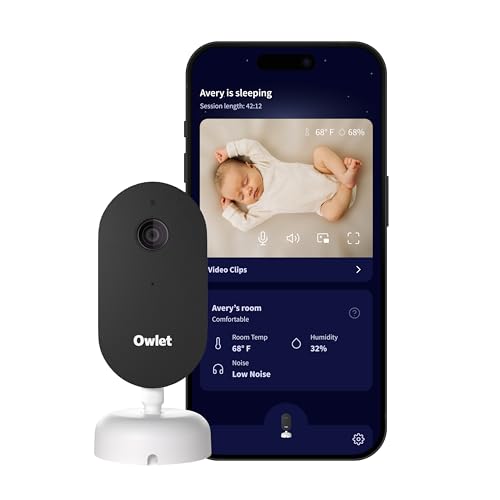
A 2K camera with a 130° view, 4x digital zoom, cry and motion alerts, two-way talk and room temperature and humidity alerts. You can add a Dream Sock later.
Best for: parents who want a sharp Wi-Fi camera for a lot less than a Nanit.
Price: ~$100
Owlet Dream Sock — Best Add-On for Health Readings
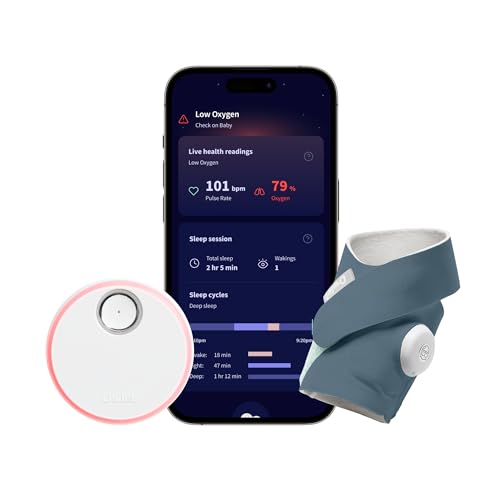
The FDA-cleared sock and Base Station on their own, with pulse rate and oxygen readings, sleep trends and alerts that work without your phone.
Best for: parents who already have a camera, including a Nanit, and want pulse and oxygen readings.
Price: ~$299
The Bottom Line
The Nanit vs Owlet decision depends on what you want to watch. Nanit is the better camera for sleep: its overhead view, sleep coaching, free breathing motion alerts and Alexa support make it the more complete video monitor. Owlet is the only one of the two that reads pulse rate and oxygen, with an FDA-cleared sock, and its Dream Sight camera costs much less.
If you mostly want to see your baby and understand their sleep, choose Nanit. If you want pulse rate and oxygen readings, choose Owlet, and add a Dream Sight if you want video too.
Is Nanit or Owlet better?
It depends on what you want to monitor. Nanit is the better camera, with an overhead view, sleep tracking and coaching, free breathing motion alerts and Alexa support. Owlet’s Dream Sock reads pulse rate and oxygen and is FDA-cleared, and its Dream Sight camera costs less.
Does Nanit track oxygen levels like Owlet?
No. Nanit’s Breathing Wear lets the camera watch breathing motion and alert you if it stops, but it doesn’t measure oxygen or heart rate. Only Owlet’s Dream Sock reads pulse rate and oxygen level.
Do Nanit and Owlet need a subscription?
No. Nanit’s live video, breathing motion alerts, white noise and nightlight are free, and sleep analysis is free for three months before the Sleep plan costs under $10 a month. Owlet’s readings, alerts and sleep trends are free, and Owlet360 costs $99.99 a year for 14 days of video history.
Is the Owlet Dream Sock FDA approved?
The Dream Sock received FDA De Novo clearance in 2023 as an over-the-counter monitor that shows pulse rate and oxygen level and alerts you when readings leave preset ranges. It’s cleared for healthy babies from 1 to 18 months and 6 to 30 pounds. Nanit says its products aren’t medical devices.
Can you use Nanit and Owlet together?
Yes. Some parents use a Nanit camera for video and sleep tracking and an Owlet Dream Sock for pulse and oxygen readings. The two don’t connect to each other, so you’ll use both apps.

Written by Evan Mercer
Founder & Lead Researcher, Smart Home Matrix
Evan digs through spec sheets, firmware changelogs, and thousands of owner reviews so you don’t have to. Every guide starts with a compatibility check and ends with picks he would install in his own home. Read more about Evan and this site, or see exactly how we choose products.