
Last updated: October 2026
Introduction
If you’re an Apple user building out a smart home, finding the best HomeKit thermostat can bring more comfort, convenience, and control through Siri, the Apple Home app, and smart automations. In 2026, the range of HomeKit-compatible thermostats is strong, but not every model offers the same experience. For picks across every ecosystem, not just Apple, see our roundup of the best smart thermostats.
Some thermostats work with Apple Home through native HomeKit support. Others connect through Matter, which can be useful for cross-platform compatibility, but may not always expose every sensor or automation feature in the same way. In this guide, we focus on the best thermostats for Apple Home users, including premium Ecobee models, simple touchscreen options, budget picks, and newer Matter-based choices.
So, if you’re a homeowner optimizing for energy savings, a renter looking for reliable remote control, or a HomeKit user who wants strong Siri and automation support, this guide will help you choose the right thermostat for HomeKit. If you are still weighing the payoff first, our guide on whether smart thermostats save money covers the real numbers.
If you’re looking for more energy-saving options, a great add-on for your smart home is a smart plug with energy monitoring.
What Is the Best HomeKit Thermostat in 2026?
For most Apple users, the best smart thermostat for Apple HomeKit is the Ecobee SmartThermostat Premium. It offers built-in Siri, a remote SmartSensor, strong HVAC compatibility, air quality monitoring, and full Apple Home support for scenes, automations, and remote control.
For a more affordable option, the Ecobee Smart Thermostat Essential is the best budget HomeKit thermostat. For larger homes, the Honeywell Home X8S brings a bundled room sensor and serious multi-stage HVAC support (our ecobee vs Honeywell comparison explains how the two brands differ in Apple Home). If you want a budget Matter option for Apple Home, the Lux TQ1 is worth considering. The Aqara W200 is the pick if you want Apple’s Adaptive Temperature to run your heating and cooling, and homes with electric baseboard heaters should look at the Mysa LITE.
We also selected Ecobee as one of the top choices in our broader guide to the best HomeKit devices.
HomeKit Thermostat Comparison Table
| Model | Price | Apple Home | Alexa | Google Home | Matter | C-Wire | Sensors | Best For |
|---|---|---|---|---|---|---|---|---|
| Ecobee SmartThermostat Premium | ~$260 | Native HomeKit + Siri built-in | Yes | Yes | No (native HomeKit) | Yes + PEK included | 1 included | Best overall |
| Ecobee SmartThermostat Enhanced | ~$200 | Native HomeKit | Yes | Yes | No (native HomeKit) | Yes + PEK included | Sold separately | Best no-mic Ecobee |
| Ecobee Smart Thermostat Essential | ~$140 | Native HomeKit | Yes | Yes | No (native HomeKit) | Yes, or PEK (sold sep., ~$25) | Sold separately | Best budget pick |
| Honeywell Home X8S | ~$260 | Via Matter (basic controls) | Yes | Yes | Yes | Yes, required | 1 included | Large homes, multi-stage HVAC |
| Lux TQ1 Smart Thermostat | ~$80 | Via Matter | Yes | Yes | Yes | C-wire or Power Bridge (sold sep.) | Sold separately | Budget Matter pick |
| Aqara Thermostat Hub W200 | ~$160 | Via Matter + Adaptive Temperature | Yes | Yes | Yes | C-wire or adapter (sold sep.) | Built-in radar; W100 sold separately | Apple Adaptive Temperature |
| Mysa Smart Thermostat LITE | ~$99 | Native HomeKit | Yes | Yes | No | No (120V/240V line voltage) | No | Electric baseboard heating |
HomeKit vs Matter for Thermostats: What’s the Difference?
When shopping for an Apple-compatible thermostat, you’ll see two types of compatibility mentioned: HomeKit and Matter. For the cross-platform side, our roundup of the best Matter thermostats focuses on Matter-certified models.
- Native HomeKit thermostats are designed to work directly with Apple Home, Siri, scenes, and automations.
- Matter thermostats can be added to Apple Home through the Matter standard, often with broader compatibility across Apple, Google, Alexa, and SmartThings.
- Feature depth can vary. A Matter thermostat may appear in the Home app, but not every advanced feature, sensor, or setting is guaranteed to be exposed in Apple Home.
For most Apple-first homes, a native HomeKit thermostat like Ecobee is still the safest choice: every current ecobee HomeKit thermostat (Premium, Enhanced, and Essential) pairs directly with the Home app. Matter is useful if you want cross-platform flexibility or are building a newer smart home setup that mixes Apple Home with other ecosystems. If you already own a Nest, our guide to whether Nest works with HomeKit explains which models connect through Matter.
To use remote access and automations reliably, you’ll need a HomePod, HomePod mini, or Apple TV as your Apple Home hub. iPad is no longer supported as a home hub on the latest Apple Home architecture.
Best HomeKit Thermostats in 2026
Ecobee SmartThermostat Premium — Best Overall HomeKit Thermostat

The Ecobee SmartThermostat Premium delivers the strongest overall HomeKit experience. It supports Apple Home scenes, automations, remote access, and Siri voice control. It also includes built-in Siri, so you can use the thermostat itself as a voice-control point if you already have the right Apple setup.
It comes with a SmartSensor for room-by-room comfort, supports more advanced HVAC systems, and includes a Power Extender Kit for homes without a traditional C-wire. The built-in air quality monitoring is also useful if you want more than just temperature control.
- HomeKit features: Full support for scenes, automations, Siri, and remote access via HomePod or Apple TV.
- Technical notes: Dual-band Wi-Fi, radar occupancy detection, SmartSensor support, accessory terminals for humidifiers/dehumidifiers.
- In daily use: Temperature adjustments through the Home app are quick and reliable. Built-in Siri is useful if you want voice control without placing another speaker nearby.
Pros: Built-in Siri, remote sensor included, premium screen, wide HVAC compatibility, air quality monitoring.
Cons: High price, larger design, mic/speaker may be redundant if you already have HomePods nearby.
Price: ~$260
Ecobee SmartThermostat Enhanced — Best No-Mic Ecobee Option

The Ecobee SmartThermostat Enhanced is a better fit if you like Ecobee’s HomeKit support but don’t want a microphone or speaker built into your thermostat. It omits the built-in voice assistant and air quality sensor, but keeps the core smart thermostat experience that makes Ecobee so reliable for Apple Home users.
It still supports HomeKit scenes, automations, remote access, and SmartSensors, though sensors are sold separately. For many homes, this is the better-value Ecobee pick.
- HomeKit features: Supports scenes, automations, Siri via other Apple devices, and remote access through an Apple Home hub.
- Technical notes: Dual-band Wi-Fi, SmartSensor support, radar occupancy detection, Power Extender Kit included.
- In daily use: Works smoothly with Apple Home and avoids the privacy concerns some users have with a thermostat microphone.
Pros: No mic, strong HVAC compatibility, reliable HomeKit support, good value compared with Premium.
Cons: Sensor not included, no air quality monitoring, no built-in voice assistant.
Price: ~$200
Ecobee Smart Thermostat Essential — Best Budget HomeKit Thermostat

The Ecobee Smart Thermostat Essential brings the core Ecobee experience to a lower price point. It skips premium extras like built-in Siri, air quality monitoring, and accessory terminals, but still gives you reliable Apple Home support, scheduling, remote control, and SmartSensor compatibility. To see what you give up compared with the pricier models, read our ecobee Essential vs Enhanced vs Premium comparison.
This is the HomeKit thermostat I would look at first if you want an affordable, current, easy-to-recommend option without dropping into discontinued or older models.
- HomeKit features: Remote access, Siri via other Apple devices, full automation and scene support.
- Technical notes: Wi-Fi, no built-in voice control, no air quality sensor, no accessory terminals. The Power Extender Kit is not in the box (about $25 separately if you have no C-wire).
- In daily use: Reliable Home app control and a modern touchscreen interface at a lower price than other Ecobee models.
Pros: Affordable, modern interface, full HomeKit support, good entry point into Ecobee.
Cons: No included sensor, no Power Extender Kit in the box, fewer HVAC accessory features, no built-in Siri.
Price: ~$140
If you’re already interested in the Ecobee ecosystem, you may also want to check the Ecobee Smart Video Doorbell, which we selected as one of the best smart doorbells for HomeKit.
Honeywell Home X8S — Best for Larger Homes

The Honeywell Home X8S is Resideo’s current flagship and the official replacement for the Honeywell T9, which has been discontinued. For bigger houses with rooms that run hot or cold, it is the most capable pick here: a bundled wireless room sensor lets it prioritize the rooms you actually use, and it handles demanding multi-stage setups, including heat pumps with up to two compressor stages plus electric backup heat. If room sensors are your main priority, our guide to the best thermostats with remote sensors compares how each brand uses them.
For Apple users, the X8S connects to Apple Home through Matter, so if you are shopping for a Honeywell HomeKit thermostat, expect Matter rather than native HomeKit. The cheaper Honeywell models join Apple Home the same way, and our guide to the best Honeywell thermostats compares them. Setup is a quick QR-code scan in the Home app, and you get temperature control, mode switching, and Siri commands. Be aware that the Matter integration is basic: schedules and the more advanced features stay in the First Alert app.
- HomeKit features: Added to Apple Home via Matter, with temperature control, mode changes, Siri commands, and automations based on the thermostat’s state.
- Technical notes: Bundled wireless room sensor, multi-stage heat and cool, heat pump support (up to 2 compressor stages plus electric backup, no dual fuel), air quality readout, C-wire required.
- In daily use: The large display doubles as an air quality readout and can even show a live feed from supported video doorbells.
Pros: Strong room-sensor coverage, handles advanced multi-stage HVAC few rivals match, large modern display, cross-ecosystem Matter support.
Cons: Matter integration in Apple Home is basic, C-wire required, overkill for a simple single-stage system.
Price: ~$260
Lux TQ1 Smart Thermostat — Best Budget Matter Option

The Lux TQ1 is a Matter-certified thermostat that works with Apple Home through Matter. At around $80, it is the most affordable way in this guide to get a cross-platform thermostat into an Apple Home setup, and it also works with Alexa, Google Home, and SmartThings.
It replaces the Lux TQX in this guide, which has disappeared from Amazon. The TQ1 keeps the same Matter foundation at a lower price, though two things the TQX bundled are optional extras here: the remote sensor and the Power Bridge for homes without a C-wire are both sold separately.
- HomeKit features: Added to Apple Home via Matter, with support for control, automations, and scenes.
- Technical notes: Matter over Wi-Fi, C-wire or optional Power Bridge (sold separately), optional remote sensor (sold separately).
- In daily use: Best for users who want local Matter control and cross-platform compatibility at a budget price.
Pros: Matter-based Apple Home integration, very affordable, less cloud-dependent than many Wi-Fi thermostats.
Cons: Sensor and Power Bridge cost extra, newer product, less brand recognition than Ecobee or Honeywell.
Price: ~$80
Aqara Thermostat Hub W200 — Best for Apple Adaptive Temperature

The Aqara Thermostat Hub W200 is the one to look at if you want Apple Home to manage your heating and cooling for you. Aqara markets it as the first thermostat to support Adaptive Temperature, the iOS 26 Home app feature that uses your iPhone to switch between home, sleep, away, and extended away settings without a schedule. It also supports Clean Energy Guidance, which shifts the setpoint slightly toward cleaner, often cheaper hours on the grid (contiguous U.S. only).
It does more than a thermostat usually does, too. The W200 is a Matter controller, a Thread border router, and a Zigbee hub, and it has a built-in mmWave radar presence sensor. Add an Aqara Climate Sensor W100 and it can use the temperature from another room. Like the other Matter picks here, it joins Apple Home through Matter rather than native HomeKit, and it also works with Alexa, Google Home, and SmartThings.
- HomeKit features: Added to Apple Home via Matter. Adaptive Temperature and Clean Energy Guidance need an Apple TV or HomePod home hub plus an iPhone or Apple Watch, all on version 26 or later.
- Technical notes: Dual-band Wi-Fi, Thread border router, Zigbee hub, mmWave presence sensor, heat pumps with up to 2 compressor stages plus 2 auxiliary stages, about 85 percent of 24V HVAC systems, C-wire or Aqara C-Wire Adapter (sold separately), not for line-voltage heat.
- In daily use: The screen doubles as a control panel for Aqara’s G410 and G400 video doorbells and Aqara smart locks, showing visitor snapshots on the wall.
Pros: Adaptive Temperature and Clean Energy Guidance in Apple Home, built-in Thread border router and Zigbee hub, built-in presence sensor, solid heat pump support.
Cons: Matter only (no native HomeKit), the C-wire adapter costs extra (about $30), Apple’s smart features need every device on version 26 or later.
Price: ~$160
Mysa Smart Thermostat LITE — Best for Electric Baseboard Heating
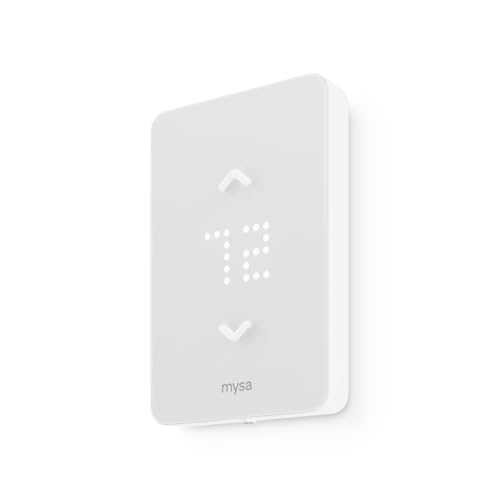
Every other pick in this guide is for central, low-voltage HVAC. If your home heats with electric baseboard, fan-forced, or in-wall heaters on 120V or 240V circuits, none of them will work. The Mysa LITE is built specifically for line-voltage heating, and it is one of the very few options in that category with native Apple HomeKit support.
It brings scheduling, remote control, and Home app automations to heaters that were previously stuck with a dumb dial, and Mysa estimates up to around 26 percent in heating savings.
- HomeKit features: Native HomeKit support with scenes, automations, Siri, and remote access through an Apple Home hub.
- Technical notes: For 120V/240V electric baseboard and in-wall heaters only; wires directly into the high-voltage heating circuit.
- In daily use: Also works with Alexa and Google Home, which is rare in the line-voltage category.
Pros: One of the few smart thermostats for line-voltage heat, full three-ecosystem support, meaningful savings on electric heating.
Cons: Only for high-voltage heating systems, not for central HVAC, and installation involves high-voltage wiring, so hire an electrician if you are not comfortable with that.
Price: ~$99
Compatibility Matrix
| Product | HomeKit | Alexa | Google Home | Matter | Thread | Hub Required | Wiring/Power |
|---|---|---|---|---|---|---|---|
| Ecobee SmartThermostat Premium | Yes (native) | Yes (built in) | Yes | No | No | None (Wi-Fi) | C-wire, or Power Extender Kit (included) |
| Ecobee SmartThermostat Enhanced | Yes (native) | Yes | Yes | No | No | None (Wi-Fi) | C-wire, or Power Extender Kit (included) |
| Ecobee Smart Thermostat Essential | Yes (native) | Yes | Yes | No | No | None (Wi-Fi) | C-wire, or Power Extender Kit (sold separately) |
| Honeywell Home X8S | Yes (Matter) | Yes | Yes | Yes | Not stated | None (Wi-Fi) | C-wire required |
| Lux TQ1 Smart Thermostat | Yes (Matter) | Yes | Yes | Yes | No (Matter over Wi-Fi) | None (Wi-Fi) | C-wire, or Power Bridge (sold separately) |
| Aqara Thermostat Hub W200 | Yes (Matter) | Yes | Yes | Yes | Yes (Thread border router) | None (Wi-Fi; it is a hub itself) | C-wire, or Aqara C-Wire Adapter (sold separately) |
| Mysa Smart Thermostat LITE | Yes (native) | Yes | Yes | No | No | None (Wi-Fi) | 120V/240V line voltage, 4 wires |
Two things this table can’t show: every pick still needs an Apple TV or HomePod as an Apple Home hub for remote control and automations, and the three Matter picks (X8S, Lux TQ1, and W200) expose fewer settings in Apple Home than in their own apps, so schedules and sensor options mostly stay in the maker’s app.
Other Options We Considered
Eve Thermostat: Eve announced this Matter over Thread thermostat at CES 2026 at $129.95, with no accounts or cloud service required. As of October 2026 the U.S. model is still listed as coming soon and is not on Amazon, so we can’t recommend it yet. We’ll look again once it ships.
Meross Matter thermostats: Meross makes inexpensive Matter thermostats that work with Apple Home, but they cover the same budget Matter slot as the Lux TQ1, so we kept one pick there.
C-Wire and HVAC Compatibility: Check This Before Buying
Smart thermostats are more complicated than smart plugs or bulbs because they connect directly to your HVAC system. Before buying any HomeKit thermostat, check your wiring and system compatibility carefully. If you find you have no C-wire, our roundup of the best smart thermostats without a C-wire covers models that install anyway. If your home has ductless mini splits rather than central HVAC, see our guide to the best smart thermostats for mini splits, where three of the five options work with Apple Home.
- C-wire: Many smart thermostats need a C-wire for constant power. Without one, the thermostat may not turn on or may behave unpredictably.
- Power adapters: The Ecobee Premium and Enhanced include a Power Extender Kit, while the Essential needs one bought separately (about $25). The Lux TQ1 works with an optional Power Bridge and the Aqara W200 with Aqara’s C-Wire Adapter, both sold separately. These can help in homes without a dedicated C-wire, and our guide to C-wire adapters explains which one fits your thermostat.
- C-wire required models: The Honeywell X8S requires a C-wire.
- Line-voltage heating: Electric baseboard and in-wall heaters run on 120V/240V circuits, which standard smart thermostats cannot control. The Mysa LITE is built for exactly this, and our guide to the best smart thermostats for baseboard heaters covers all four HomeKit-compatible options.
- Heat pumps: If you have a heat pump, auxiliary heat, or emergency heat, confirm compatibility before buying. Our guide to the best thermostats for heat pumps compares how each model handles backup heat.
- Advanced HVAC: Multi-stage systems, dual-fuel setups, humidifiers, dehumidifiers, and ventilators may require a thermostat with accessory terminals, such as Ecobee Premium.
- When unsure: Use the manufacturer’s compatibility checker or ask an HVAC professional before installing.
Our guide on how to install a smart thermostat walks through the wiring step by step. If you are not comfortable working with thermostat wiring, it is better to hire a professional. Incorrect thermostat wiring can stop your heating or cooling system from working correctly.
How to Choose the Right Apple HomeKit Thermostat
Best for Large Homes
Honeywell Home X8S: Comes with a bundled room sensor and handles advanced multi-stage HVAC, making it a good fit for multi-room temperature balancing.
Best for Renters
Ecobee Smart Thermostat Essential: Reliable HomeKit control without requiring a premium thermostat.
Renters might also like our guide on the best smart locks for renters.
Best Budget Pick
Ecobee Smart Thermostat Essential: This is the best current budget pick for most HomeKit users. If you are open to non-HomeKit options, our guide to the best smart thermostats under $100 has cheaper picks.
Best Apple Home Experience
Ecobee SmartThermostat Premium: Built-in Siri, rich HomeKit support, room sensor pairing, and wide HVAC support make it the top choice for Apple Home users.
Best for Hands-Off Apple Home Automation
Aqara Thermostat Hub W200: Apple’s Adaptive Temperature adjusts it as you come and go, and it adds a Thread border router and Zigbee hub to your home.
Remember that to get the most out of these thermostats, you will need a smart home hub for automations and remote access. We explain this in more detail in our guide on whether Apple HomeKit requires a hub.
Conclusion
Choosing the best HomeKit thermostat in 2026 depends on your home, your HVAC system, and how deep you want to go with Apple Home automations. The Ecobee SmartThermostat Premium is the best choice for most users because it combines strong HomeKit support, built-in Siri, a remote sensor, and broad HVAC compatibility.
The Ecobee Enhanced is a better pick if you want the Ecobee experience without a microphone, while the Ecobee Essential is the best budget option. The Honeywell Home X8S works well for larger homes, the Lux TQ1 is worth considering if you want a budget Matter thermostat for Apple Home, the Aqara W200 suits homes that want Apple’s Adaptive Temperature, and the Mysa LITE covers homes with electric baseboard heating.
If you’re looking to improve your smart home setup and go deeper with automations, check our other HomeKit-focused guides on the best smart plugs, top HomeKit light bulbs, best security cameras, and smart locks. For cooling, our guide to the best smart ceiling fans includes two fans that work natively with HomeKit.
If your HomeKit devices ever stop responding after setup, our HomeKit not responding troubleshooting guide can help you fix common connection problems.
All ecobee models also work with Google Home. If you run into connection issues on that side, our ecobee not working with Google Home troubleshooting guide covers every fix. And if Google is your main hub rather than Apple, see our guide to the best smart thermostats for Google Home.
Does Apple HomeKit work with all thermostats?
No. Only thermostats that explicitly support Apple HomeKit, Apple Home, or Matter will work properly in the Apple Home app. Native HomeKit thermostats usually offer the most complete Apple experience, while Matter thermostats can work well but may not expose every advanced feature or sensor in Apple Home.
Do I need a HomeKit hub to control my thermostat remotely?
Yes. To control your HomeKit thermostat remotely, run automations, and share control with others, you need a HomePod, HomePod mini, or Apple TV set up as an Apple Home hub. iPad is no longer supported as a home hub on the latest Apple Home architecture.
What’s the difference between Matter and HomeKit for thermostats?
HomeKit is Apple’s smart home platform. Matter is a newer cross-platform smart home standard that Apple also supports. A Matter thermostat may work in Apple Home, but not all advanced features, sensors, or automations are guaranteed to work exactly like they do on a native HomeKit thermostat.
Is Ecobee or Honeywell better for HomeKit users?
Ecobee is usually the better choice for Apple HomeKit users because it offers strong native HomeKit support, reliable automations, SmartSensor compatibility, and built-in Siri on the Premium model. Honeywell’s current X8S connects to Apple Home through Matter and is a strong pick for larger homes, but the Matter integration is basic: schedules and advanced features stay in the First Alert app.
Do HomeKit thermostats need a C-wire?
Many HomeKit thermostats need a C-wire for constant power. The Ecobee Premium and Enhanced include a Power Extender Kit (it is sold separately for the Essential), the Honeywell X8S requires a C-wire, the Lux TQ1 works with a C-wire or an optional Power Bridge, and the Aqara W200 works with a C-wire or Aqara’s C-Wire Adapter. The Mysa LITE is different: it wires directly into 120V/240V baseboard heating circuits. Always check your wiring and HVAC compatibility before buying.
What is the best budget HomeKit thermostat?
The best budget HomeKit thermostat for most people in 2026 is the Ecobee Smart Thermostat Essential. It offers full Apple Home support at a lower price than Ecobee’s Premium and Enhanced models. If your home uses electric baseboard heating instead of central HVAC, the Mysa LITE at around $99 is the budget pick to look at.

Written by Evan Mercer
Founder & Lead Researcher, Smart Home Matrix
Evan digs through spec sheets, firmware changelogs, and thousands of owner reviews so you don’t have to. Every guide starts with a compatibility check and ends with picks he would install in his own home. Read more about Evan and this site, or see exactly how we choose products.