
Last updated: November 2026
EcoFlow and Jackery are the two brands most people compare when they want a battery that keeps the fridge, the Wi-Fi and the lights on during a power outage. The EcoFlow vs Jackery choice comes down to what you value more. EcoFlow gives you more outlets, a faster switchover to battery and more ways to expand. Jackery’s stations are lighter and cost less at list price.
Both brands now use long-life LFP batteries and both sell everything from 1kWh units to systems that connect to your electrical panel, so it makes more sense to compare them size by size than brand against brand. This guide compares the three matchups that matter for home backup, how each brand handles charging, solar, warranty and apps, and which model to buy in each size.
EcoFlow vs Jackery: The Short Answer
Quick answer: choose EcoFlow if you want more outlets, a switchover of 10 ms or less on every model, a 1kWh station you can expand later, or 240V from a single unit for a well pump or central air. Choose Jackery if you want the lightest station for its capacity, the lowest list price per kWh, or an expandable whole-home system for about $1,400 less than EcoFlow’s. Neither brand works with Apple Home, Alexa or Google Home.
These are the six models worth looking at, in three matching sizes:
- EcoFlow DELTA 3 — Best EcoFlow 1kWh station, with six AC outlets and room to expand to 5kWh.
- Jackery HomePower 1000 v2 — Best Jackery 1kWh station, lighter and cheaper, with a 10 ms switchover.
- EcoFlow DELTA 3 Max — Best EcoFlow 2kWh station, with 2,400W for large appliances.
- Jackery Explorer 2000 v2 — Best Jackery 2kWh station, one of the lightest 2kWh units you can buy.
- EcoFlow DELTA Pro 3 — Best EcoFlow whole-home system, with 120V and 240V from one unit.
- Jackery HomePower 3600 Plus — Best Jackery whole-home system, 3.6kWh on wheels that you can expand to about 21kWh.
What EcoFlow Does Best
EcoFlow’s main advantage is how much each station can do. At every size it has more AC outlets than the matching Jackery: six on the DELTA 3 against three, and seven on the DELTA Pro 3, including a 240V outlet that can connect to your home through a transfer switch. All three EcoFlow models in this guide switch to battery in 10 milliseconds or less when the power goes out, which keeps a desktop computer or a router running without a restart.
EcoFlow also gives you more ways to grow. You can add batteries to the 1kWh DELTA 3 to reach 5kWh, and the DELTA Pro 3 expands to 48kWh. For a permanent setup, EcoFlow sells its Smart Home Panel 2, which a licensed electrician installs next to your main panel so the DELTA Pro 3 can power selected circuits from the app. Our guide to smart electrical panels explains how this kind of panel works.
However, there are some downsides. EcoFlow’s stations are heavier: the DELTA 3 Max weighs about 45 lb and the DELTA Pro 3 about 113 lb. Their list prices are higher too, although EcoFlow discounts them often (the DELTA 3 and DELTA 3 Max were both on sale on Amazon when we checked in November 2026). On the DELTA 3, only three of the six AC outlets are grounded, so plug anything with a three-prong plug into those.
What Jackery Does Best
Jackery’s main advantage is weight and price. Each Jackery in this guide is lighter than the EcoFlow it competes with: 23.4 lb against about 28 lb at 1kWh, 39.5 lb against about 45 lb at 2kWh, and 77 lb against about 113 lb for the whole-home systems. That matters when you carry a station from a closet to the kitchen in the dark. At list price, Jackery also costs less per kWh in every size.
Jackery’s newer HomePower models are built for home backup. The HomePower 1000 v2 switches to battery in 10 ms and has built-in surge protection, and Jackery rates its HomePower batteries for 6,000 charge cycles. The HomePower 3600 Plus expands to about 21kWh with extra Battery Pack 3600 units, and Jackery sells it with a manual transfer switch so you can power home circuits without running extension cords.
However, there are some downsides. Jackery’s stations have fewer outlets, usually three or four. The Explorer 2000 v2 takes 20 ms to switch over and accepts only 400W of solar, which The Solar Lab calls underpowered for a 2kWh unit. Jackery’s fastest charging modes have to be turned on in its app. The HomePower 3600 Plus outputs only 120V, so you need two units and Jackery’s 240V hub for 240V appliances.
EcoFlow vs Jackery Side by Side
Here’s how the two brands compare on the points that matter most for home backup:
| Factor | EcoFlow | Jackery |
|---|---|---|
| Battery type | LFP on all three models | LFP on all three models |
| Switchover to battery | 10 ms or less on all three | 10 ms, 20 ms, or not published |
| AC outlets | 6, 4 and 7 | 3, 3 and 4 plus an RV outlet |
| Weight | About 28, 45 and 113 lb | 23.4, 39.5 and 77 lb |
| Expansion | 1kWh to 5kWh, whole-home to 48kWh | Whole-home to about 21kWh |
| 240V from one unit | Yes, DELTA Pro 3 | No, two units and a hub |
| Battery rating | 4,000 cycles to 80% | 6,000 cycles to 70% (HomePower) |
| Solar plug | XT60, widely used | Jackery’s own DC8020 on HomePower models |
| Warranty | Up to 5 years | Up to 5 years |
| Apple Home, Alexa, Google Home | No | No |

1kWh: DELTA 3 vs HomePower 1000 v2
Both stations store 1,024Wh and recharge from a wall outlet in under an hour (the Jackery in 50 minutes with Emergency Charging turned on in its app). The DELTA 3 costs about $699 and the HomePower 1000 v2 about $649. For the extra money, EcoFlow gives you 1,800W of output instead of 1,500W, twice as many AC outlets and the option to add batteries later. The Jackery is about 5 lb lighter.
2kWh: DELTA 3 Max vs Explorer 2000 v2
This is the size most homes need to keep a fridge and a few essentials going through an outage of up to about a day. The DELTA 3 Max has more power (2,400W against 2,200W), one more AC outlet and a faster switchover. The Explorer 2000 v2 is about 5 lb lighter and costs about $999, against about $1,199 for the EcoFlow. Neither can be expanded. If you’re not sure what your fridge uses, one of the best smart plugs with energy monitoring can measure it for a few days before you choose a size.
Whole-home: DELTA Pro 3 vs HomePower 3600 Plus
These two are where the brands differ the most. The DELTA Pro 3 outputs 120V and 240V on its own, so it can run a well pump, an electric dryer or central air, and it has 4,096Wh that expands to 48kWh. It also costs about $3,299 at EcoFlow (sold out there and on Amazon in early November 2026) and weighs about 113 lb. The HomePower 3600 Plus has 3,584Wh, expands to about 21kWh, rolls on wheels and costs about $1,899, but it’s a 120V unit. The Solar Lab found that its UPS mode handles up to 1,400W, and Jackery doesn’t publish a switchover time for it.
Both connect to your home through a transfer switch or EcoFlow’s panel, never through a regular outlet. Generac explains why back-feeding your electrical panel is dangerous, so have an electrician do this part.
Warranty and battery life
Both brands give you up to five years of warranty on these models, but part of it depends on registering the product. Jackery’s is three years plus two more when you register, and EcoFlow adds two years to some models when you register them in its app. Keep your receipt and register the station when you set it up.
The cycle ratings aren’t measured the same way. EcoFlow rates the DELTA 3 for 4,000 cycles until the battery holds 80% of its capacity, while Jackery rates its HomePower models for 6,000 cycles until it holds 70%. For backup use, where you only run the battery down during an outage, either rating gives you many years of use.
Apps and smart home
Both brands have apps that work over Wi-Fi and Bluetooth, show the battery level and what you’re drawing, and let you change charging settings. EcoFlow’s app also lets you schedule charging and discharging, which helps if your utility charges more at certain hours.
Neither brand lists support for Apple Home, Alexa, Google Home or Matter on these stations. If you use Home Assistant, community-made integrations exist for EcoFlow, but they aren’t official.
Which Should You Choose?
In the Jackery vs EcoFlow decision, the answer usually depends on these situations:
- You want the lowest price for 1kWh or 2kWh: Jackery, at list price.
- You’ll carry the station around the house or take it camping: Jackery, which is lighter at every size.
- You want to start small and add batteries later: EcoFlow, with the DELTA 3.
- You need to keep a desktop computer or network gear running without a restart: EcoFlow, which switches in 10 ms or less on all three models.
- You need 240V for a well pump, dryer or central air: EcoFlow, with the DELTA Pro 3.
- You want an expandable whole-home system on a tighter budget: Jackery, with the HomePower 3600 Plus.
- You already own solar panels from another brand: EcoFlow, because its XT60 solar plug is the more common one.
Which EcoFlow or Jackery Products to Buy
EcoFlow DELTA 3 — Best EcoFlow 1kWh Station

A 1,024Wh station with 1,800W of output and six AC outlets, three of them grounded. It recharges to 80% in about 30 minutes, accepts up to 500W of solar, switches to battery in under 10 ms and weighs about 28 lb. You can add DELTA 3 or DELTA Pro 3 batteries to reach 5kWh.
Best for: a first backup station for the Wi-Fi, lights and phones, with room to grow.
Price: ~$699
Jackery HomePower 1000 v2 — Best Jackery 1kWh Station
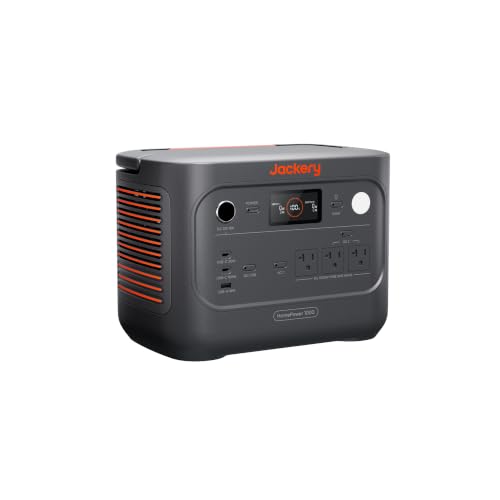
A 1,024Wh station with 1,500W of output, three AC outlets, two USB-C ports and built-in surge protection. It switches to battery in 10 ms, refills in 50 minutes with Emergency Charging in the Jackery app (or 1.25 hours in the default mode) and weighs 23.4 lb. It can’t be expanded. If you mainly want to protect electronics from power spikes, our guide to smart plugs vs surge protectors explains what a surge protector does.
Best for: the lightest and cheapest 1kWh backup for a router, a computer and a few lights.
Price: ~$649
EcoFlow DELTA 3 Max — Best EcoFlow 2kWh Station

A 2,048Wh station with 2,400W of output (up to 3,400W in X-Boost mode for heaters and other resistive loads) and four AC outlets. The Solar Lab measured a full recharge in 68 minutes on AC, and it switches to battery in under 10 ms. It weighs about 45 lb and can’t be expanded.
Best for: running a fridge, a microwave or power tools through a day-long outage.
Price: ~$1,199
Jackery Explorer 2000 v2 — Best Jackery 2kWh Station

A 2,042Wh station with 2,200W of output and three AC outlets, at 39.5 lb. It charges to 80% in 66 minutes with AC fast charging, switches to battery in 20 ms and is UL 1778 tested as a UPS. Solar input tops out at 400W, and it can’t be expanded. OutdoorGearLab measured about 84% of its rated capacity in use, which is typical.
Best for: a 2kWh backup you can still carry, at the lowest price for this size.
Price: ~$999
EcoFlow DELTA Pro 3 — Best EcoFlow Whole-Home System

A 4,096Wh station with 4,000W of output at 120V and 240V, seven AC outlets including a 30A L14-30R outlet for a transfer switch, and a 10 ms switchover. It expands to 48kWh with extra batteries, takes up to 2,600W of solar and works with EcoFlow’s Smart Home Panel 2. It weighs about 113 lb, on wheels.
Best for: homes with 240V appliances or anyone who wants to back up several circuits for days.
Price: ~$3,299 (sold out at EcoFlow and Amazon in early November 2026)
Jackery HomePower 3600 Plus — Best Jackery Whole-Home System

A 3,584Wh station with 3,600W of output, four 120V outlets and a 30A RV outlet, on wheels with a telescopic handle. It expands to about 21kWh with Battery Pack 3600 units, recharges in 2.5 hours on AC and takes up to 1,000W of solar. It’s 120V only (two units and Jackery’s 240V hub give you 240V). Our guide to the best portable power stations for home backup explains how to size a system like this.
Best for: an expandable 120V backup for the fridge, furnace fan and lights, for about $1,400 less than the DELTA Pro 3.
Price: ~$1,899
The Bottom Line
The EcoFlow vs Jackery decision isn’t about battery quality, because both use LFP cells and give you up to five years of warranty. EcoFlow gives you more outlets, a faster switchover, more expansion and 240V from one unit. Jackery gives you lighter stations and lower list prices, plus an expandable whole-home system that costs far less than EcoFlow’s. Choose the size first, then the brand that fits how you’ll use it.
If you’d like to see what your home uses before you choose, a home energy monitor shows it circuit by circuit.
Is EcoFlow better than Jackery?
It depends on what you need. EcoFlow has more outlets, switches to battery in 10 ms or less on its current DELTA models and expands further. Jackery’s stations are lighter and cost less at list price, and its HomePower 3600 Plus is a cheaper expandable whole-home system.
Which charges faster, EcoFlow or Jackery?
On current models they’re close. The EcoFlow DELTA 3 and the Jackery HomePower 1000 v2 both recharge from a wall outlet in under an hour, although the Jackery needs Emergency Charging turned on in its app for its 50-minute time.
Can EcoFlow or Jackery power a whole house?
Not from a single small station. The EcoFlow DELTA Pro 3 outputs 120V and 240V and expands to 48kWh, and the Jackery HomePower 3600 Plus expands to about 21kWh. Both connect through a transfer switch or EcoFlow’s Smart Home Panel 2, installed by an electrician.
Do EcoFlow and Jackery have the same warranty?
Both give you up to five years on these models. Part of it depends on registering the product: Jackery adds two years to its three-year warranty when you register, and EcoFlow does the same for some models through its app.
Do EcoFlow or Jackery power stations work with Alexa or Google Home?
Neither brand lists support for Alexa, Google Home, Apple Home or Matter on these stations. You control them in the EcoFlow or Jackery app over Wi-Fi or Bluetooth.
Can I use Jackery solar panels with EcoFlow?
Only with an adapter cable. Jackery’s HomePower models use its own DC8020 solar plug, while EcoFlow uses the more common XT60 plug, so check the panel’s voltage and current against the station’s solar input before you connect it.

Written by Evan Mercer
Founder & Lead Researcher, Smart Home Matrix
Evan digs through spec sheets, firmware changelogs, and thousands of owner reviews so you don’t have to. Every guide starts with a compatibility check and ends with picks he would install in his own home. Read more about Evan and this site, or see exactly how we choose products.